
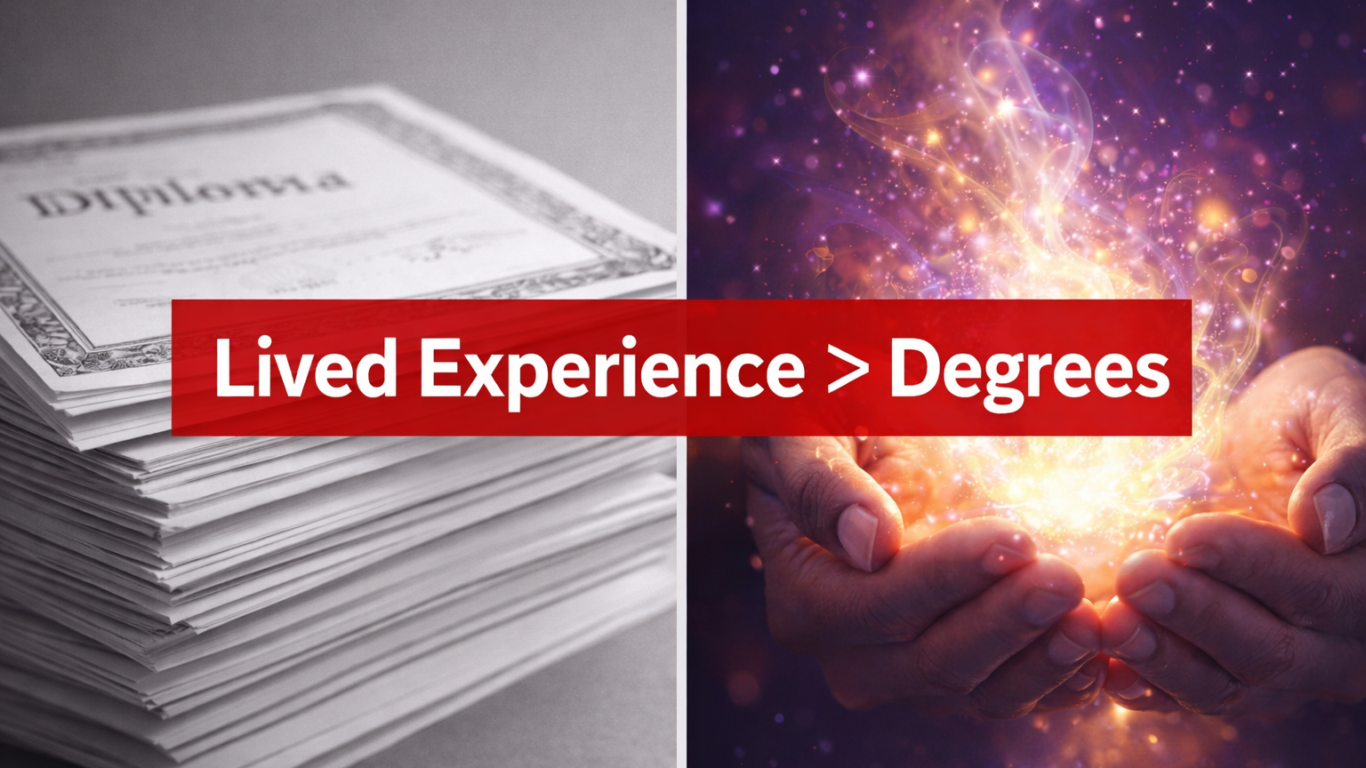
Why Dolores Cannon Dropped All Training Requirements
One interesting question I am sometimes asked about Dolores Cannon is about her actual credentials. People want to know if she held a formal clinical hypnotherapy degree, or a state-issued medical or psychology license. It’s a fair question, especially in a world that often equates legitimacy with paperwork.
In the video above, I share the honest answer and the fuller context behind it. Dolores did not hold a university clinical hypnotherapy degree, and she did not have a state medical or psychology license. Her background was practical. It began in the late 1960s through simple hypnosis work and grew through decades of sessions, observation, and refinement. Over time, she developed what later became known as QHHT.
What often gets missed in these conversations is that Dolores’s professional path can’t be separated from her very personal story. Her husband, Johnny, played a major role in those early years, and he was present during the first surprising regressions that emerged in that informal setting. Later, a tragic car accident changed everything. Johnny survived, but he lived with permanent disability, and their family relocated to rural Arkansas. Dolores paused her work during that season to care for her family. When she returned to sessions, her regression work truly began to unfold into the body of material so many people know today.
Another detail that surprises people is what happened when Dolores began teaching. In the beginning, she thought only trained hypnotherapists should learn her method. Then she noticed that formal training sometimes made it harder. Scripts and structured approaches could get in the way of what QHHT required: the ability to step aside, stay present, and allow the client’s own consciousness to lead. So Dolores dropped the prerequisites and opened the doors. That decision shaped the global reach of her work.
To me, the credentials question often points to something deeper. What makes someone trustworthy in this kind of work? In my experience, integrity, groundedness, humility, and consistency matter. So does the willingness to keep learning. Dolores’s story reminds us that real wisdom can come through ordinary life, and sometimes the path is built step by step, not stamped into place from the beginning by “experts.”




Responses